Ten clients, one consultant, every file in order
Your method becomes a library that client projects apply directly. Interview forms import as the system security plan; reports are generated from the data.
Your day
- Morning
- Open the dashboard: progress and overdue tasks across ten client projects, on one page.
- Late morning
- Interview at client A. The form imports straight into the system security plan; nothing to retype back at the office.
- Afternoon
- Client B uploaded two hundred files yesterday. The AI has sorted them; twenty minutes to confirm.
- Evening
- Client C is closing. The report is generated; you write only the summary and recommendations.
Three scenarios
The library: build it once, use it for every client
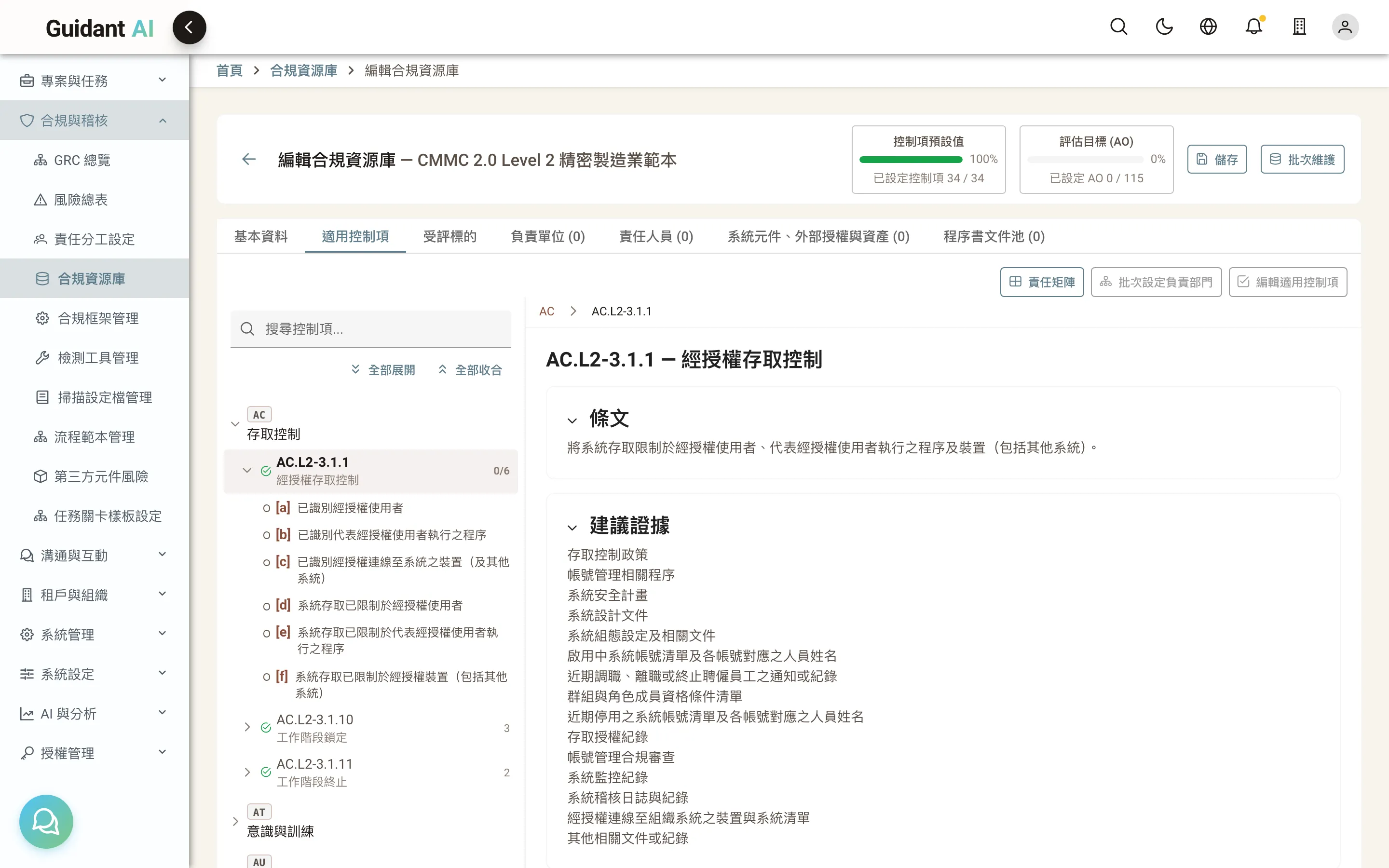
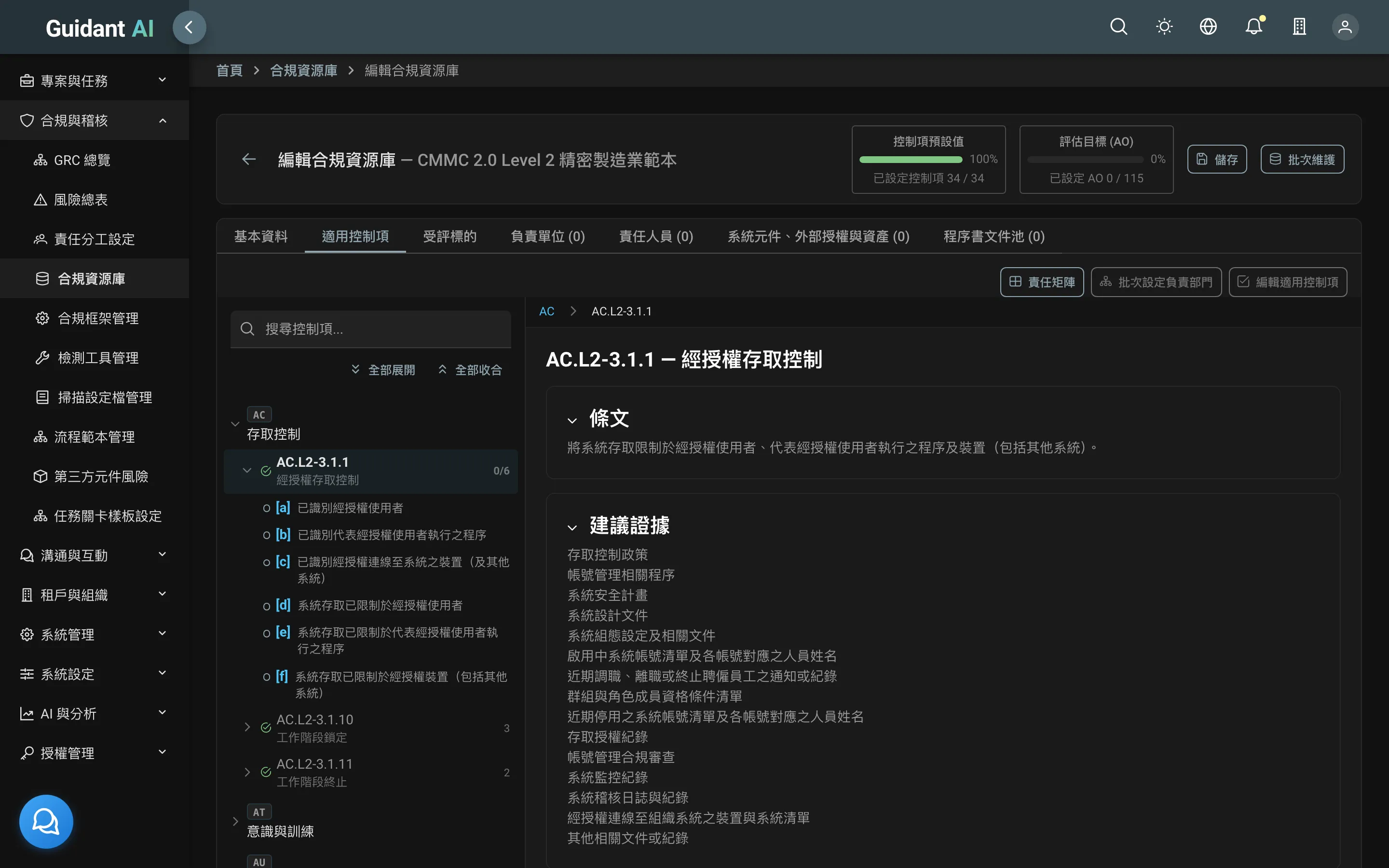
Control selections, system security plan templates, audit procedures and form settings become your firm’s library. A new client project picks the library and is set up in three minutes. When a framework changes, update the library; projects in progress are untouched.
Many clients, many tenants
One tenant per client with fully isolated data; you switch between them with one account. Client staff see only their own project.
Deliverables generated for you
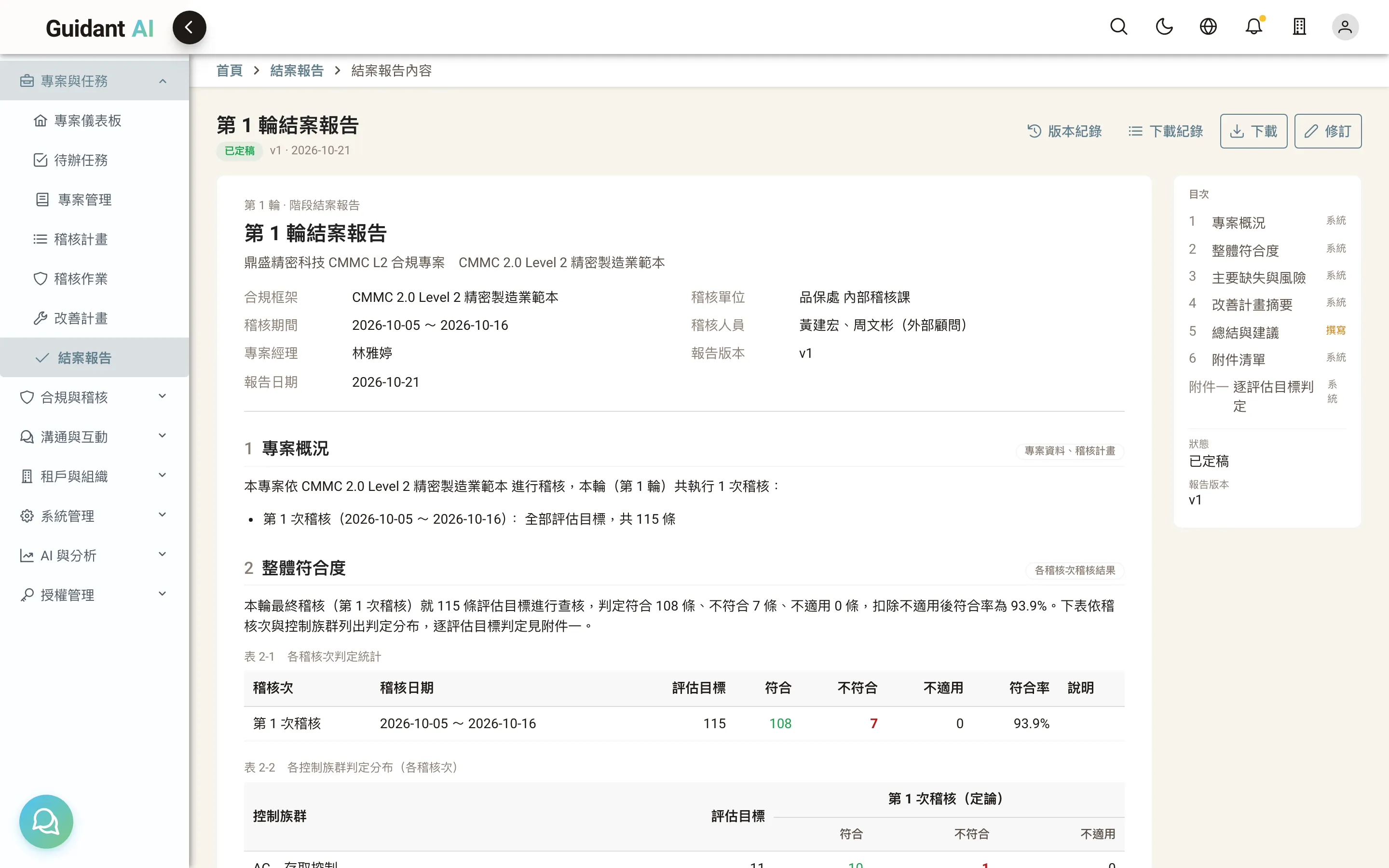
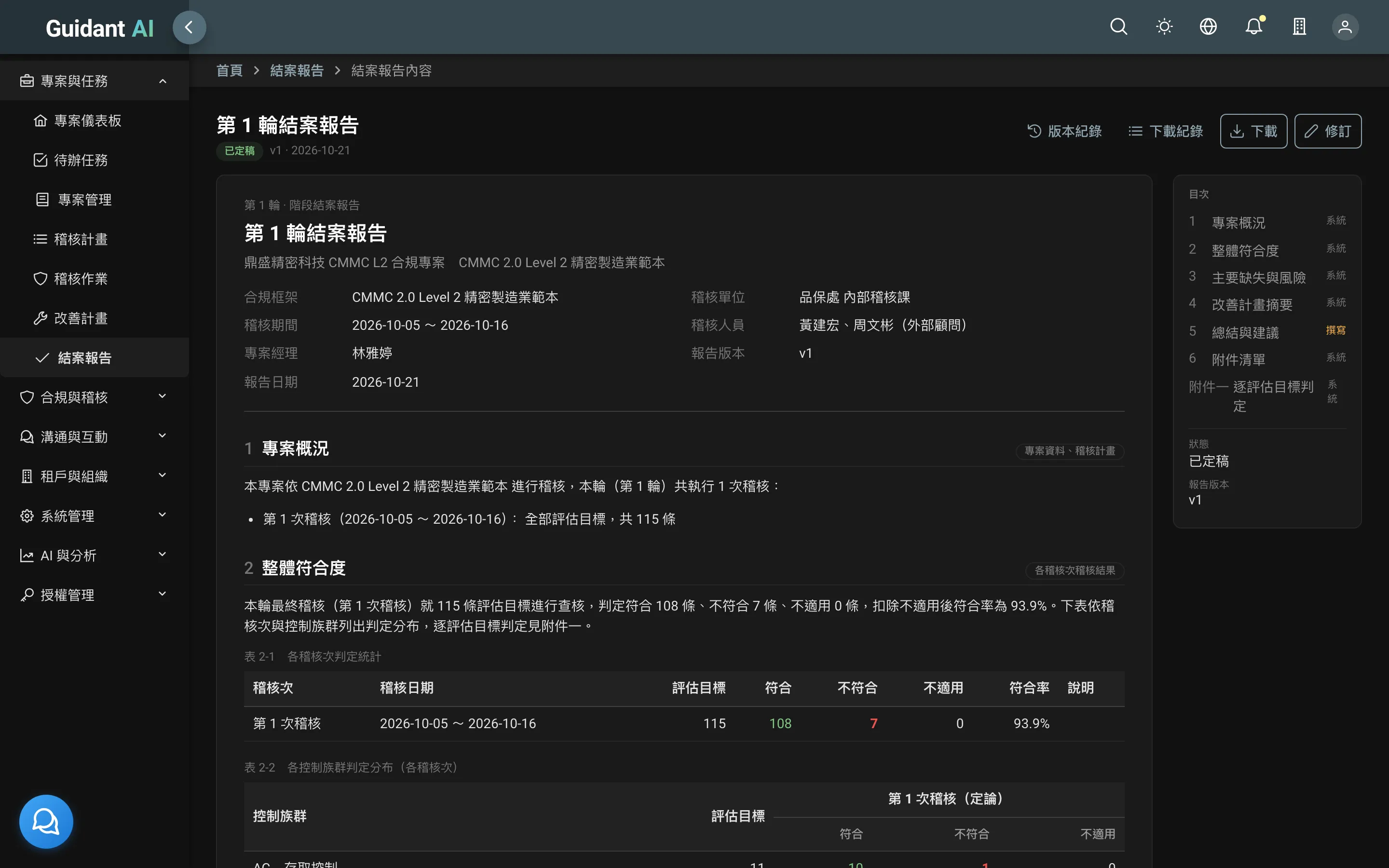
System security plan (Word), audit plan and results (Excel), remediation plan, closing report (Word or PDF), all generated from the system data. Consistent format, no layout work.
Frequently asked questions
Either. Multi-client management is usually installed at the firm; a client who requires data to stay on site runs it in their own data center, and you log in remotely with a restricted account.
Related guides
Go to the compliance guides →