AI handles the sorting; people make the judgement
Evidence classification, an AI assistant and an AI dashboard. Every call goes through the built-in gateway, and you choose the model.
The problem
The slowest part of audit preparation is sorting: hundreds of screenshots, reports and procedures, each matched to a control by hand. Hand the first pass to the AI, and keep the final confirmation with a person.
01
AI evidence classification
Drop in a few hundred files; it tells you where each one belongs
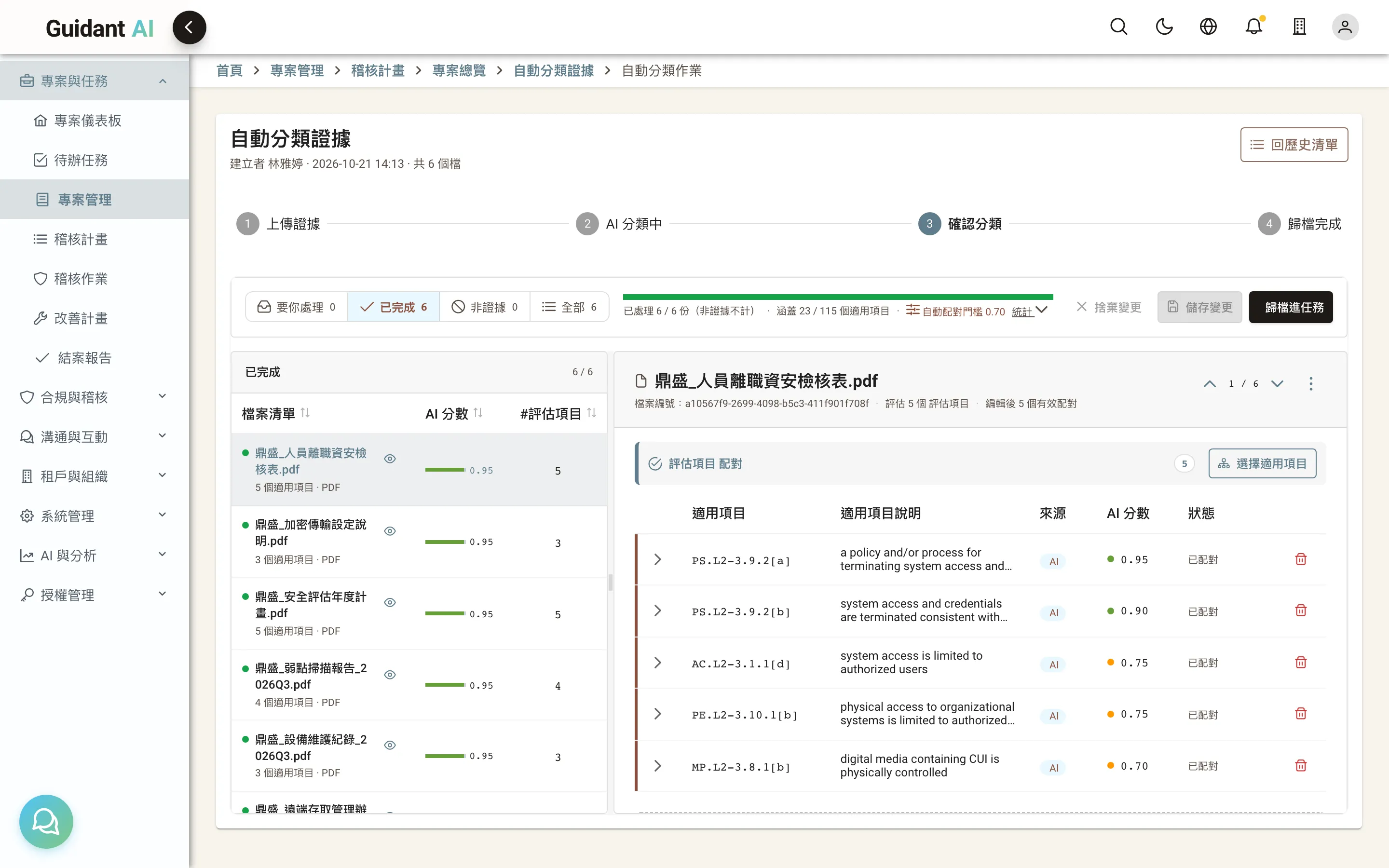
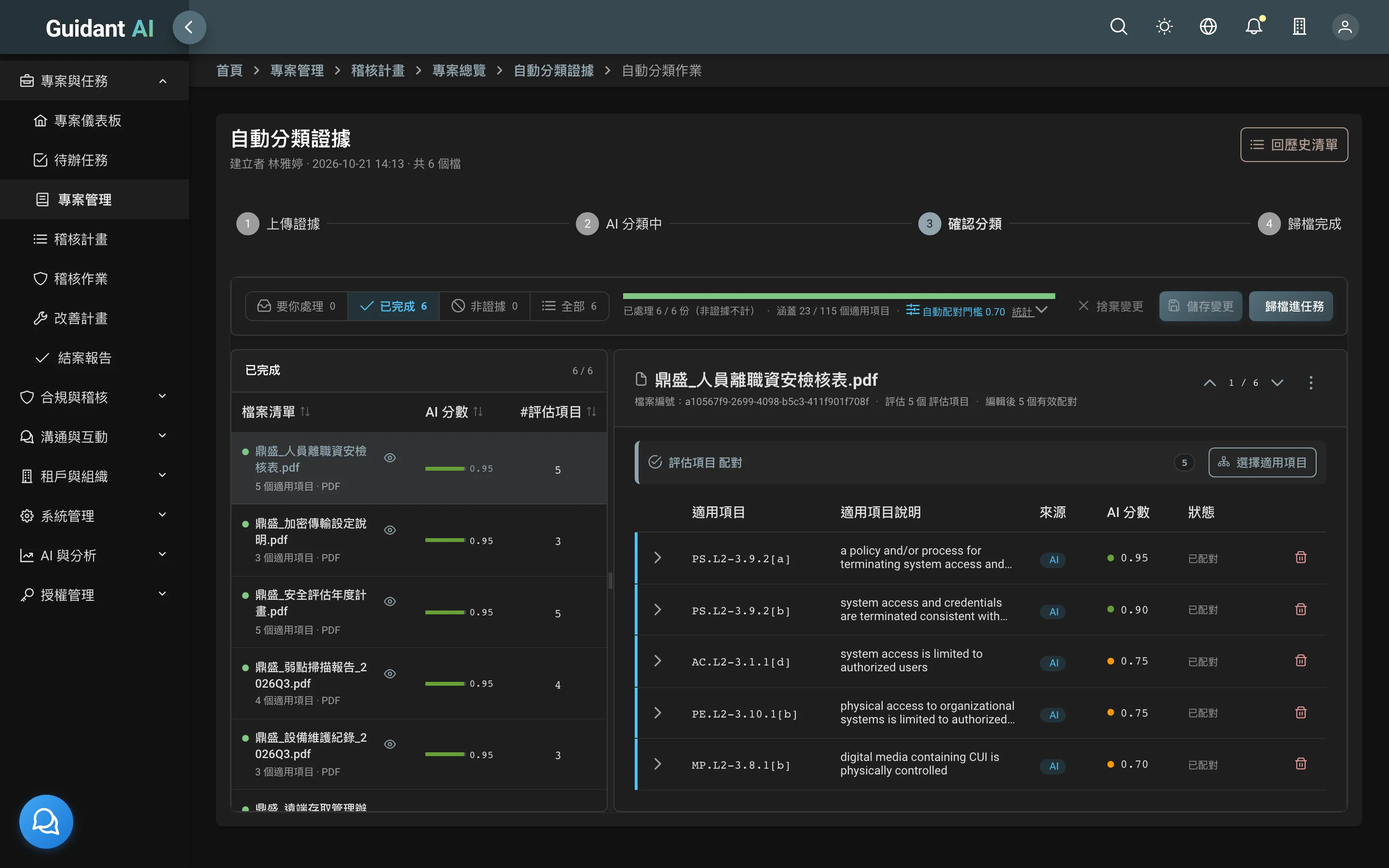
Upload a batch of evidence (PDF, images, Word, Excel, PowerPoint). The AI reads the content, proposes the assessment objective and gives a confidence score. On the confirmation page you accept or reassign each item; confirmed items are filed to their task.
- Image text recognition, so screenshots classify too
- Low-confidence items come first; high-confidence items can be confirmed in bulk
- Reports on hit rate and reassignment rate; reassignments feed back into later classification
02
AI assistant
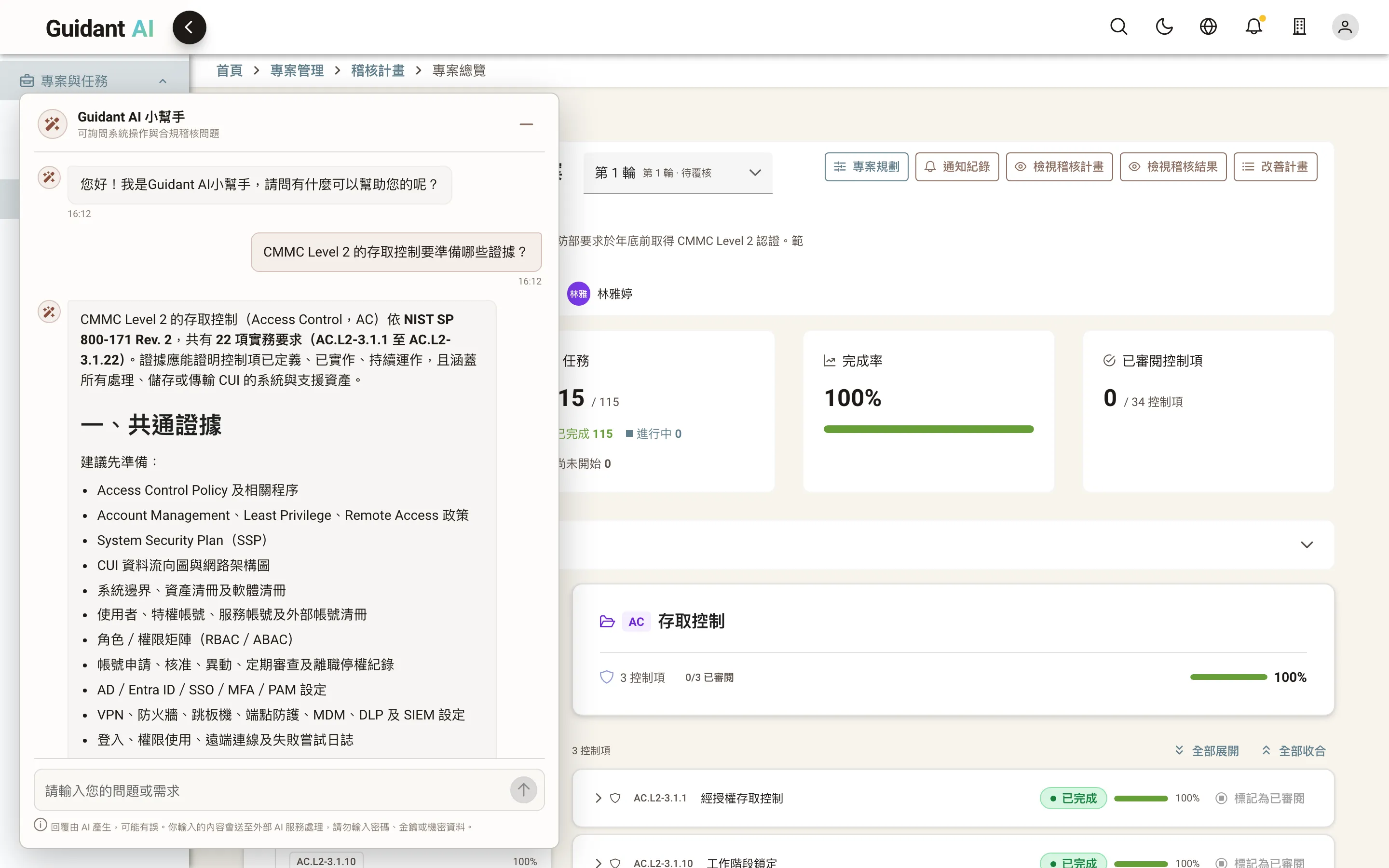
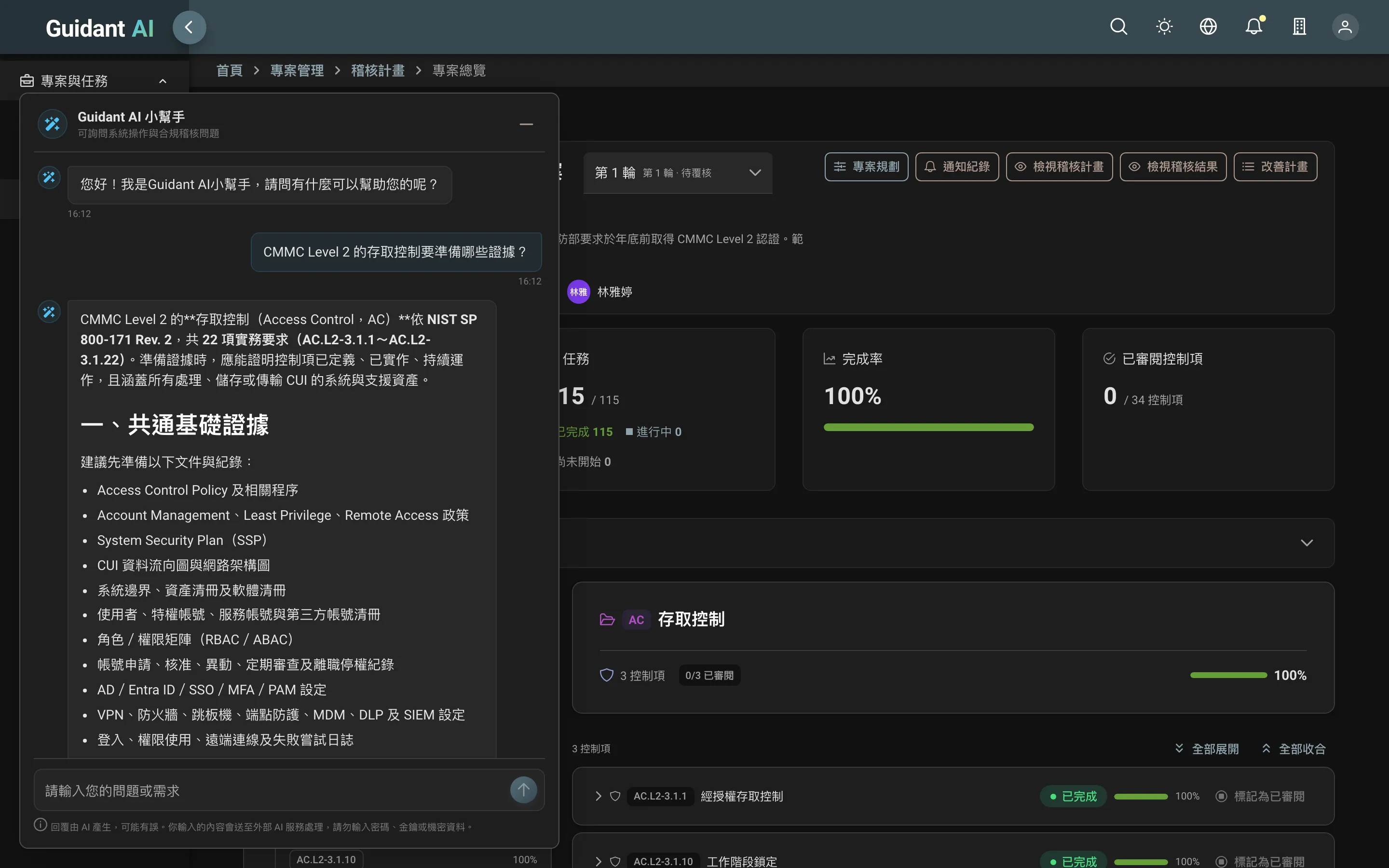
In the corner of every page, whenever you need it
Answers questions about the system (“How do I assign a task?”) and about compliance (“What evidence does ISO 27001 A.8.15 need?”). Answers take the project and page you are on into account.
03
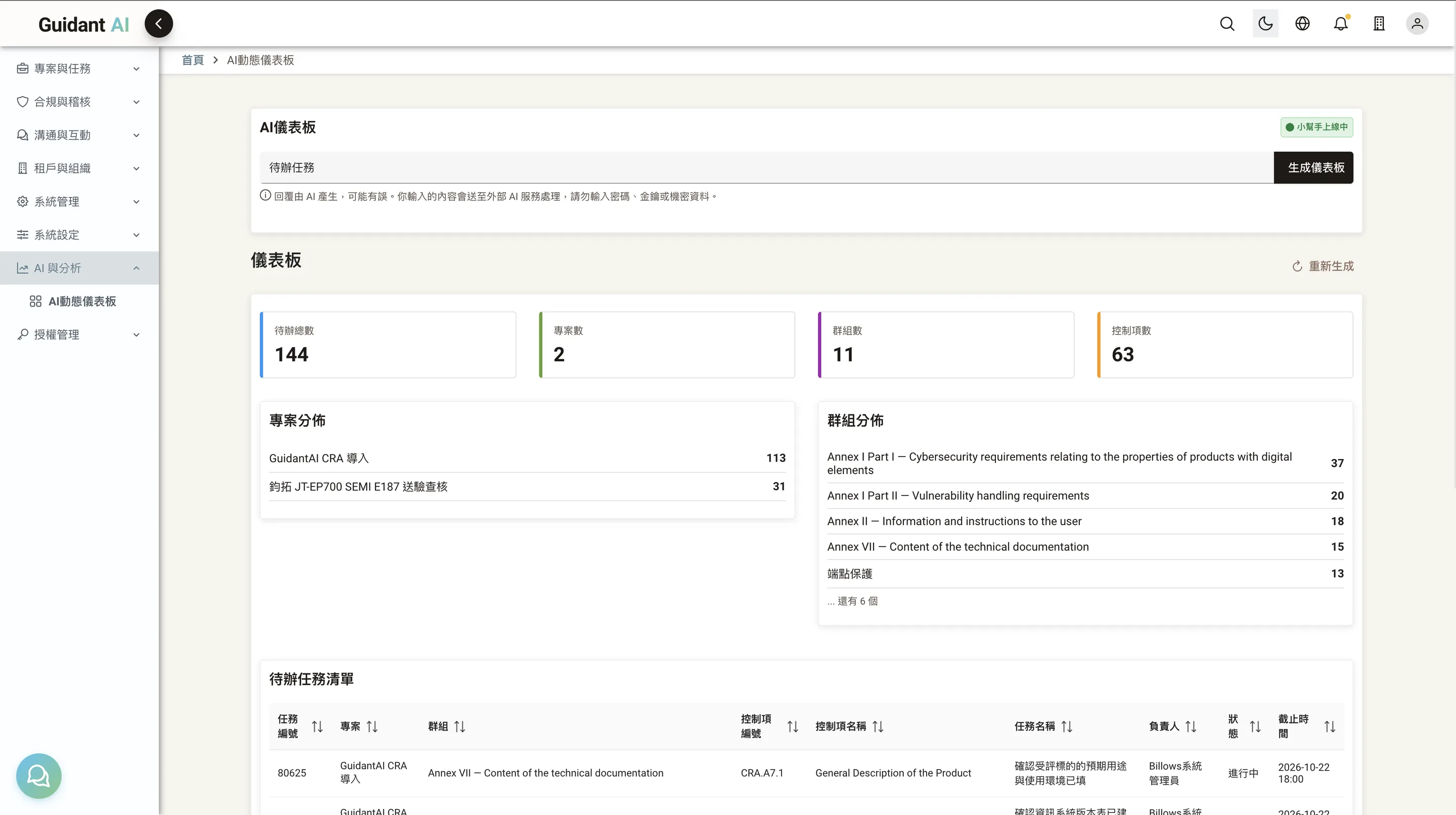
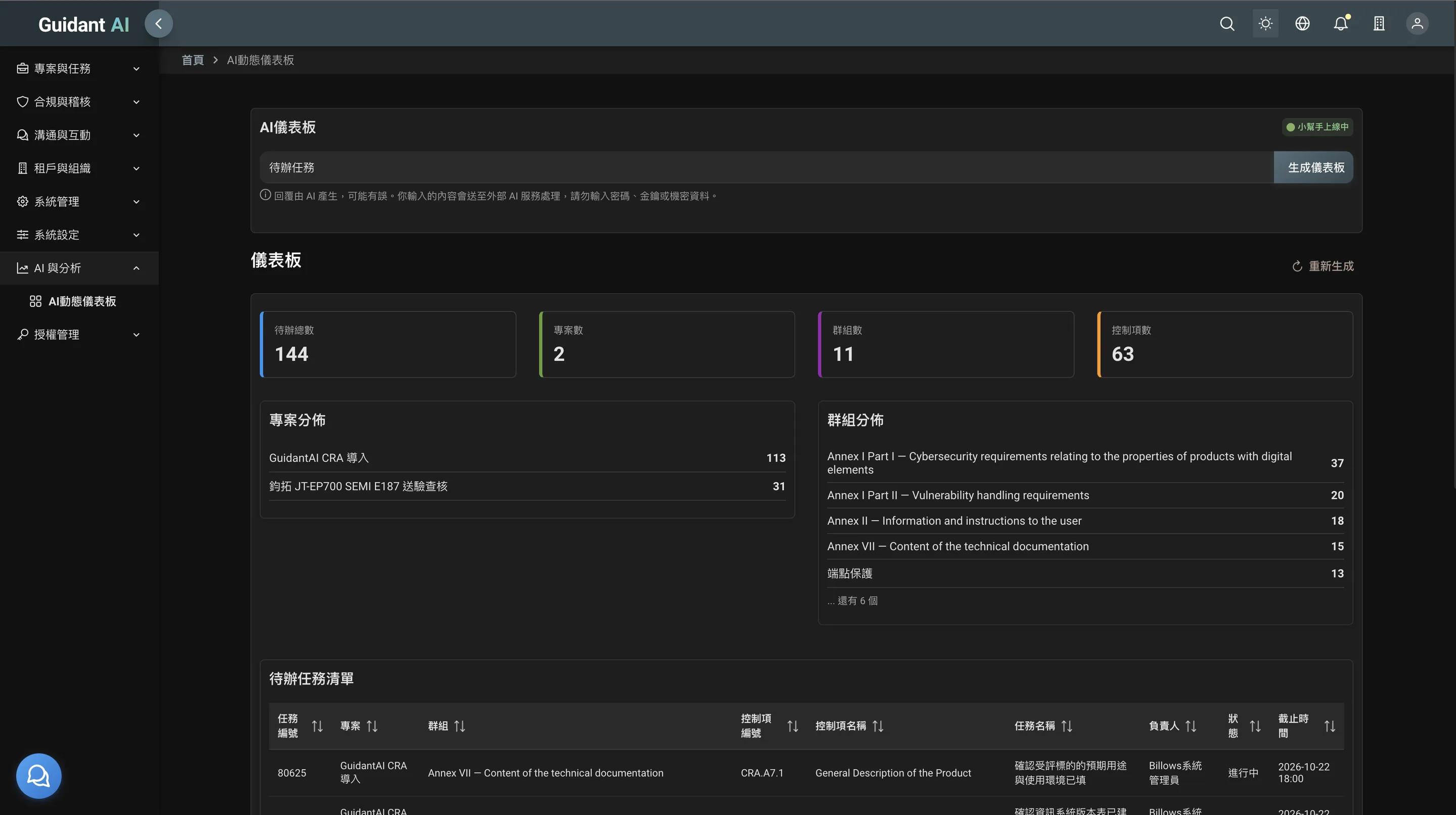
AI dashboards
Describe the chart you want in one sentence
Type “findings per department this cycle” or “compare completion rates, last year and this year”. The AI produces the chart and states its data source. Save it as a standing dashboard.
04
AI gateway: every call under control
Injection screening, request controls, quota management
All AI features go through the built-in gateway. Prompts are screened for injection, and requests for passwords or keys or attempts to run raw commands are blocked before anything is sent; every call is logged and metered. You configure the model provider (OpenAI, Anthropic, Google, Azure or a self-hosted model), and the keys stay with you.