From the first inventory to the closing report, everything the auditor asks for
Frameworks, system security plan, tasks and evidence, audit rulings and remediation plans. Every control has an owner and a record. Next year’s cycle starts with this year’s work still there.


The problem
| Before | Now |
|---|---|
| The regulation is a PDF; what to do is whatever the consultant said | Clauses become controls and assessment objectives, each stating what to check and which evidence proves it |
| The system security plan is a Word file; nobody knows who changed what | Recorded per control, with a version and a diff for every change |
| Evidence lives on laptops, in inboxes and shared drives | Evidence is uploaded to its task; the auditor opens it there |
| Next year starts over; last year’s work cannot be found | The new cycle carries over last year’s system security plan, evidence and findings |
01
Frameworks and libraries
Clauses become work someone can do
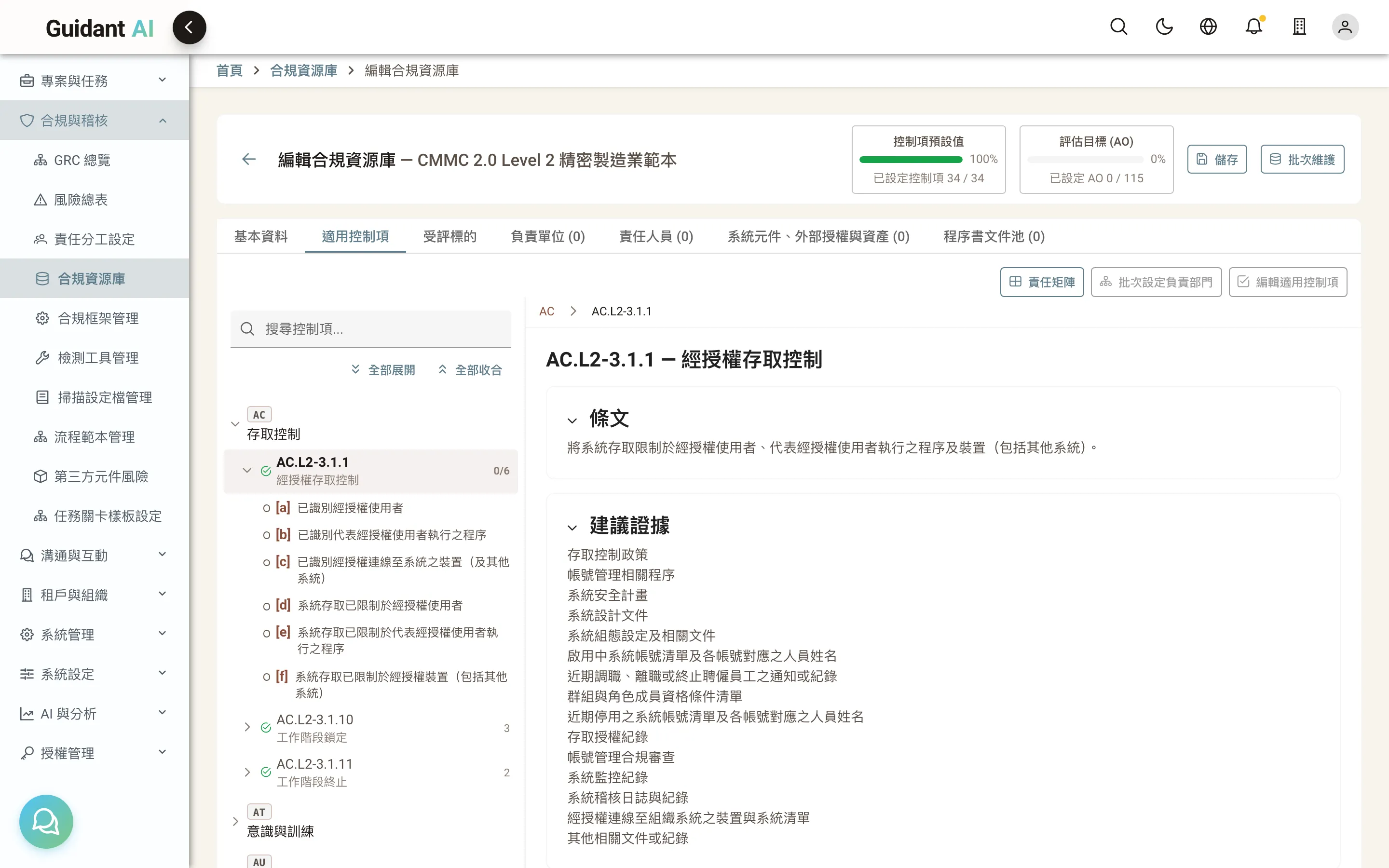
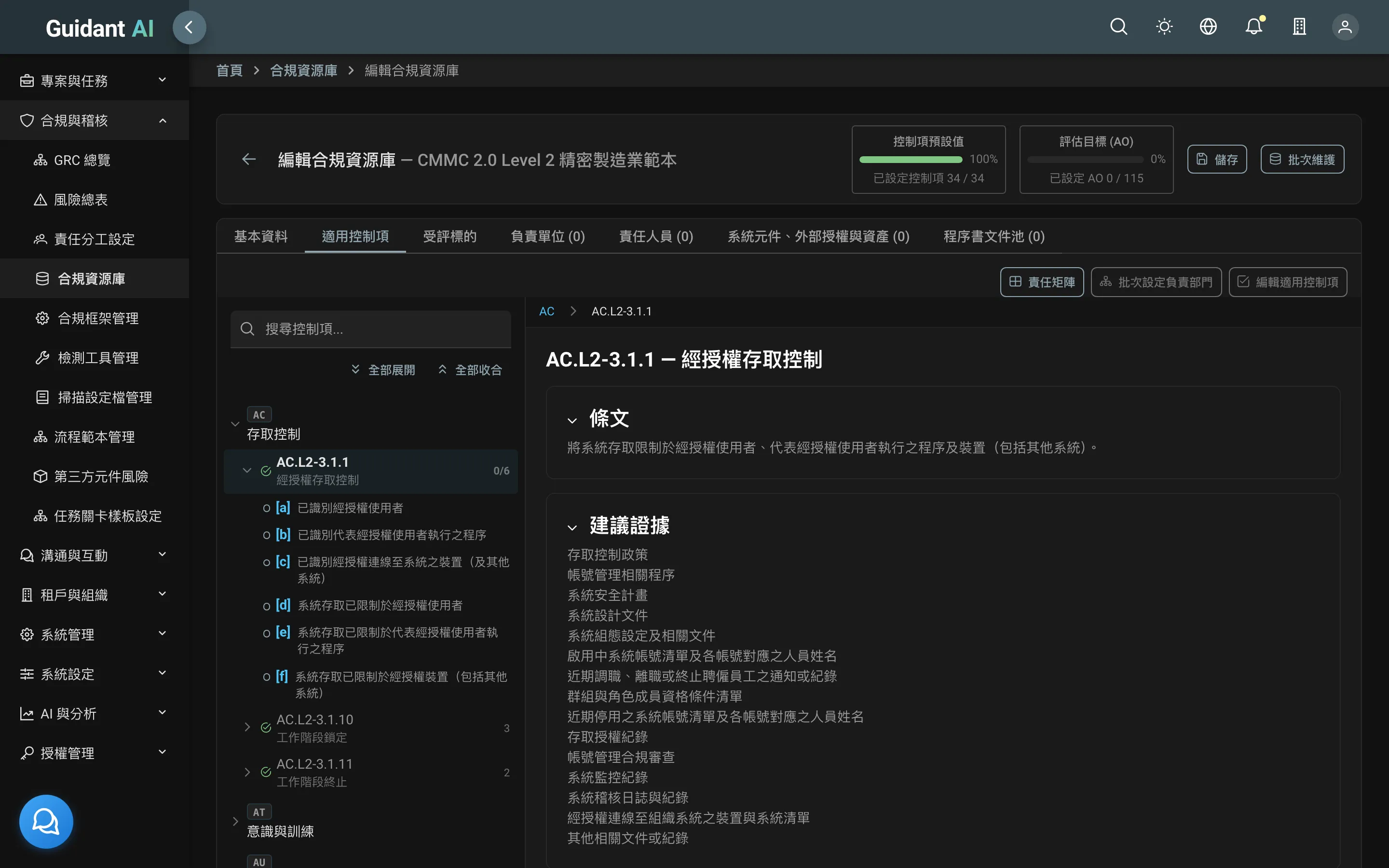
CMMC 2.0, the EU CRA and ISO/IEC 27001:2022 are built in, and we update them when the regulations change. Consultants package control selections, system security plan templates, audit procedures and form settings as a library and apply it to the next client.
- Browse controls as a tree, each with assessment objectives, suggested evidence and audit guidance
- One library can open many projects; editing the library does not touch projects in progress
- When a framework is updated, compare the old and new versions
02
Projects and the audit lifecycle
One project manages one framework over the long term
A project is the long-term management of one framework. A cycle runs planning, internal audit, external audit, remediation and closing. Next year’s cycle opens with last year’s status and findings carried over.
- The project overview shows the stage, completion rate and open tasks
- Stage gates: you cannot close while findings are still open
- Internal and external audits can run back to back within one cycle
03
System security plan
For every control: how it is done today
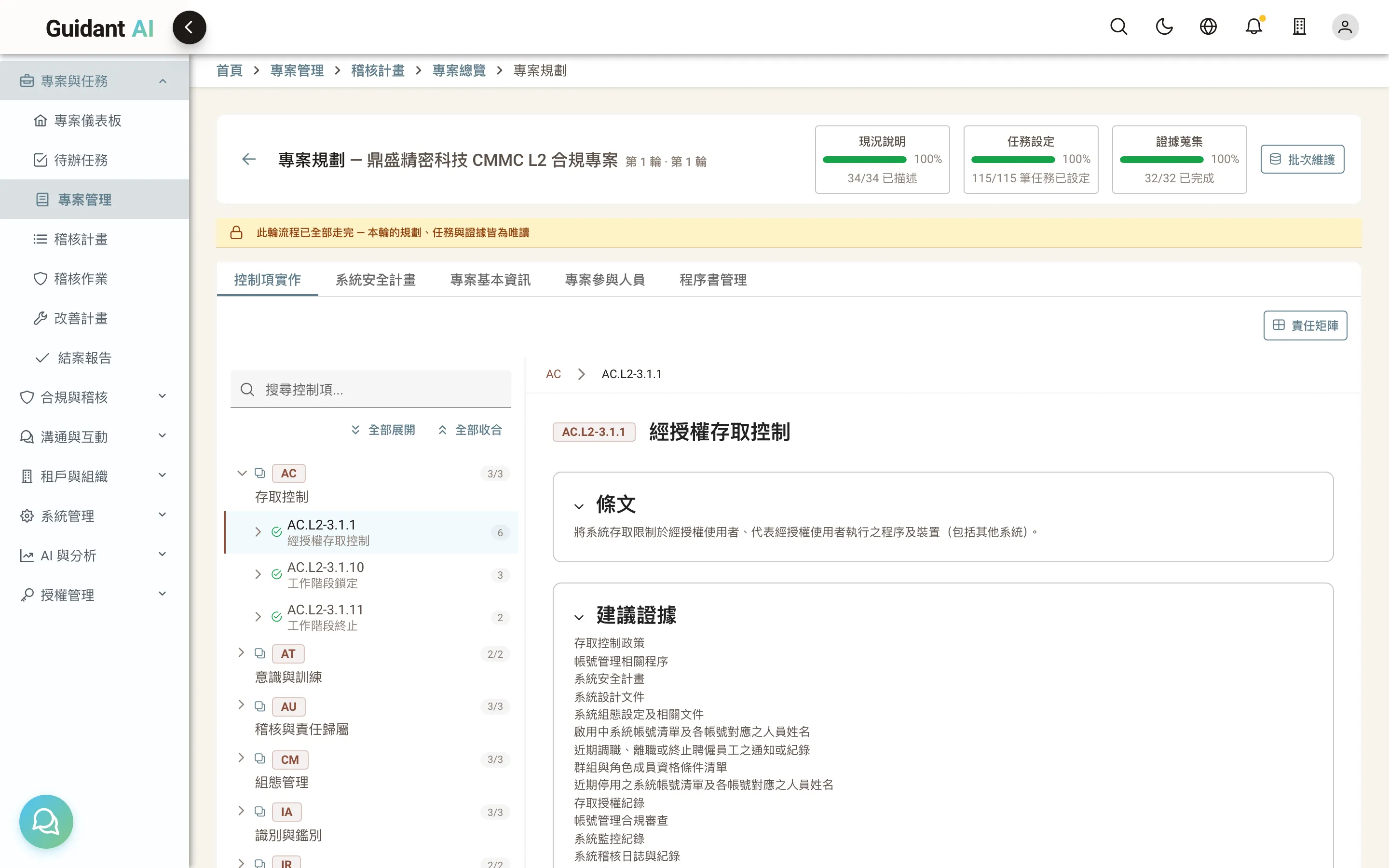
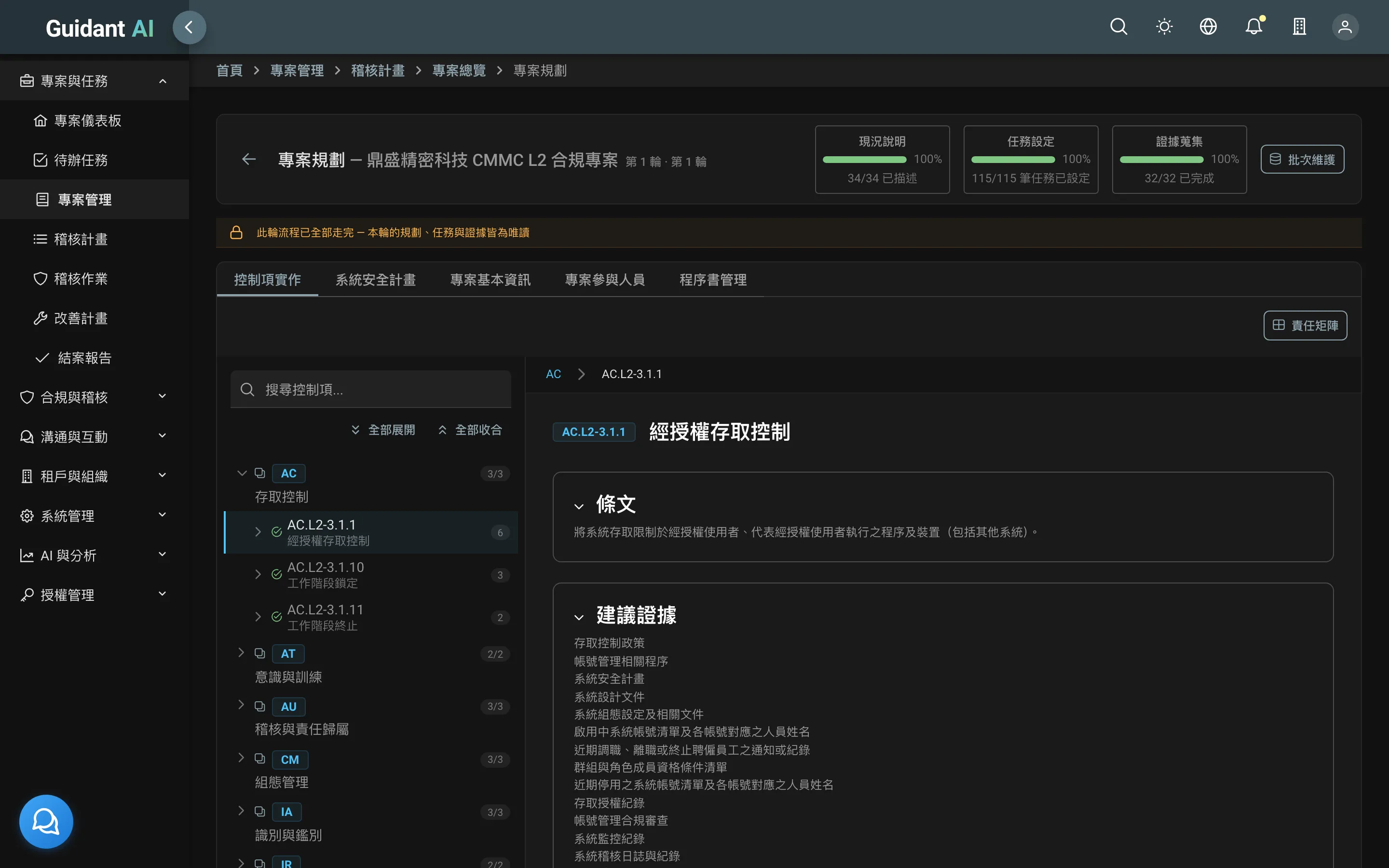
Controls on the left; on the right, this control’s implementation status, description, owning department, procedure, gaps and recommendations. Consultants import their interview notes directly.
- Status: implemented, partial, planned or not applicable, each with a stated reason
- Excel and Word import and export; Word can use the consultant’s own template
- Every import shows the diff first and overwrites only after you confirm
04
Tasks, evidence and review gates
Every assessment objective has an owner, a deadline and evidence
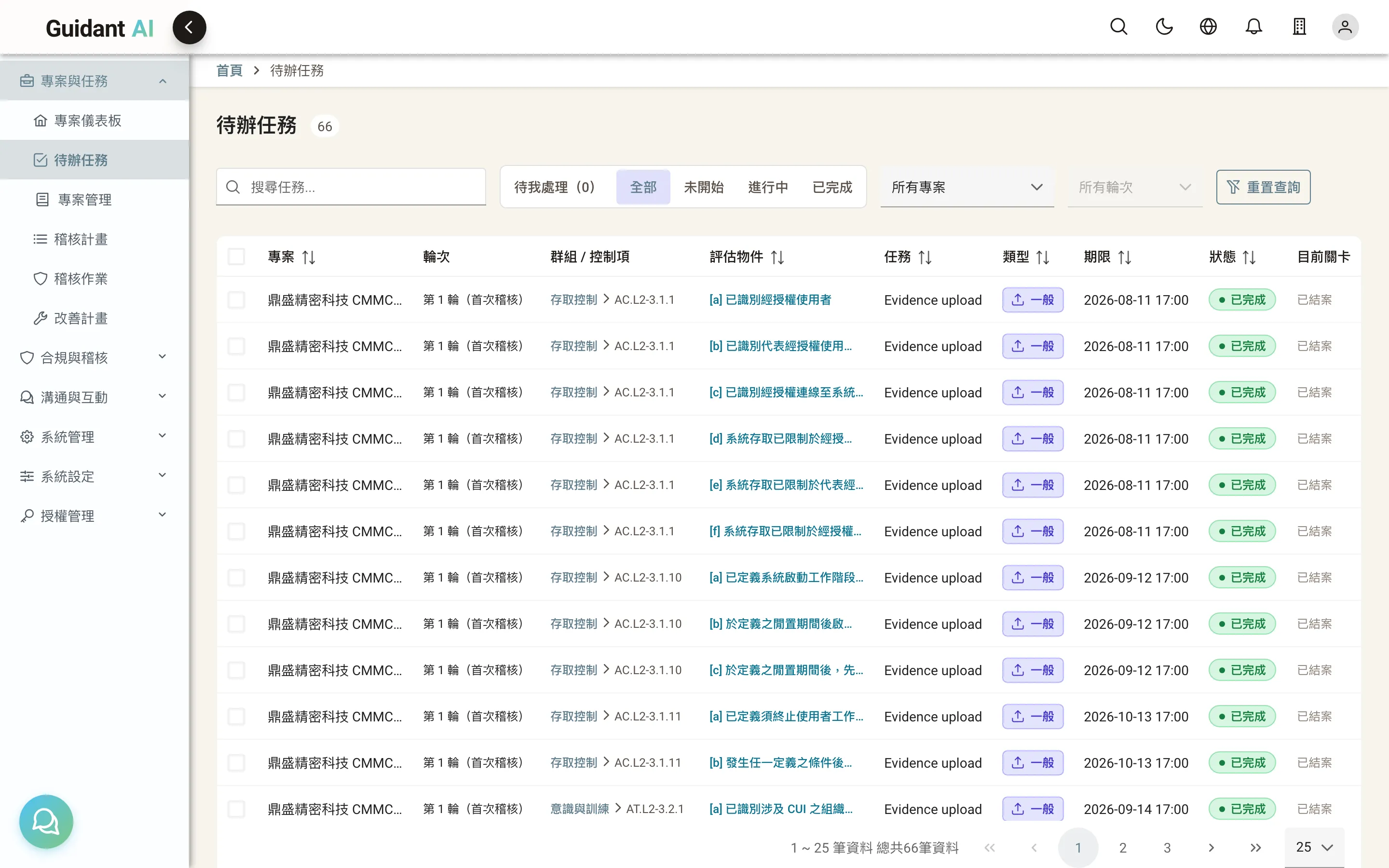
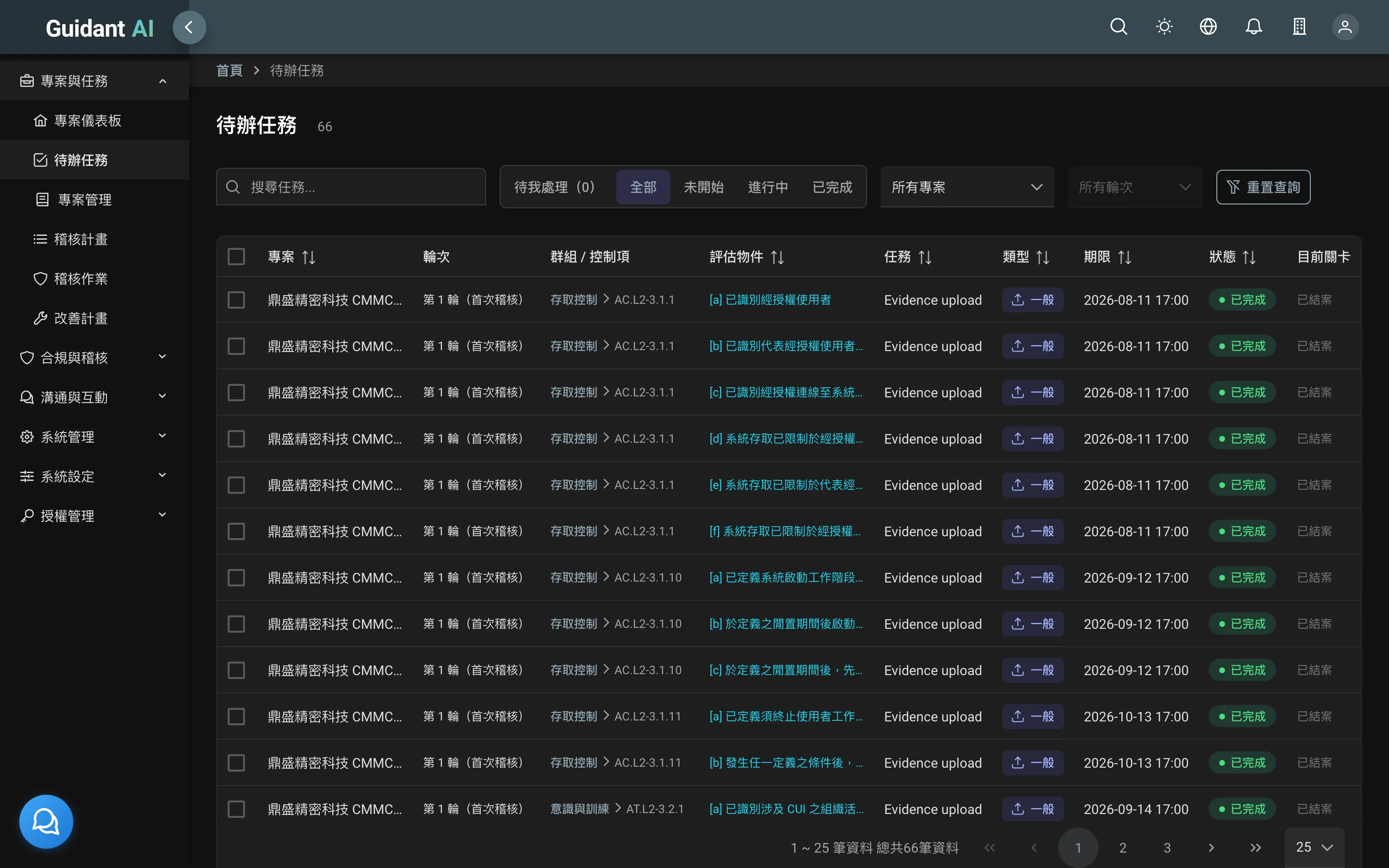
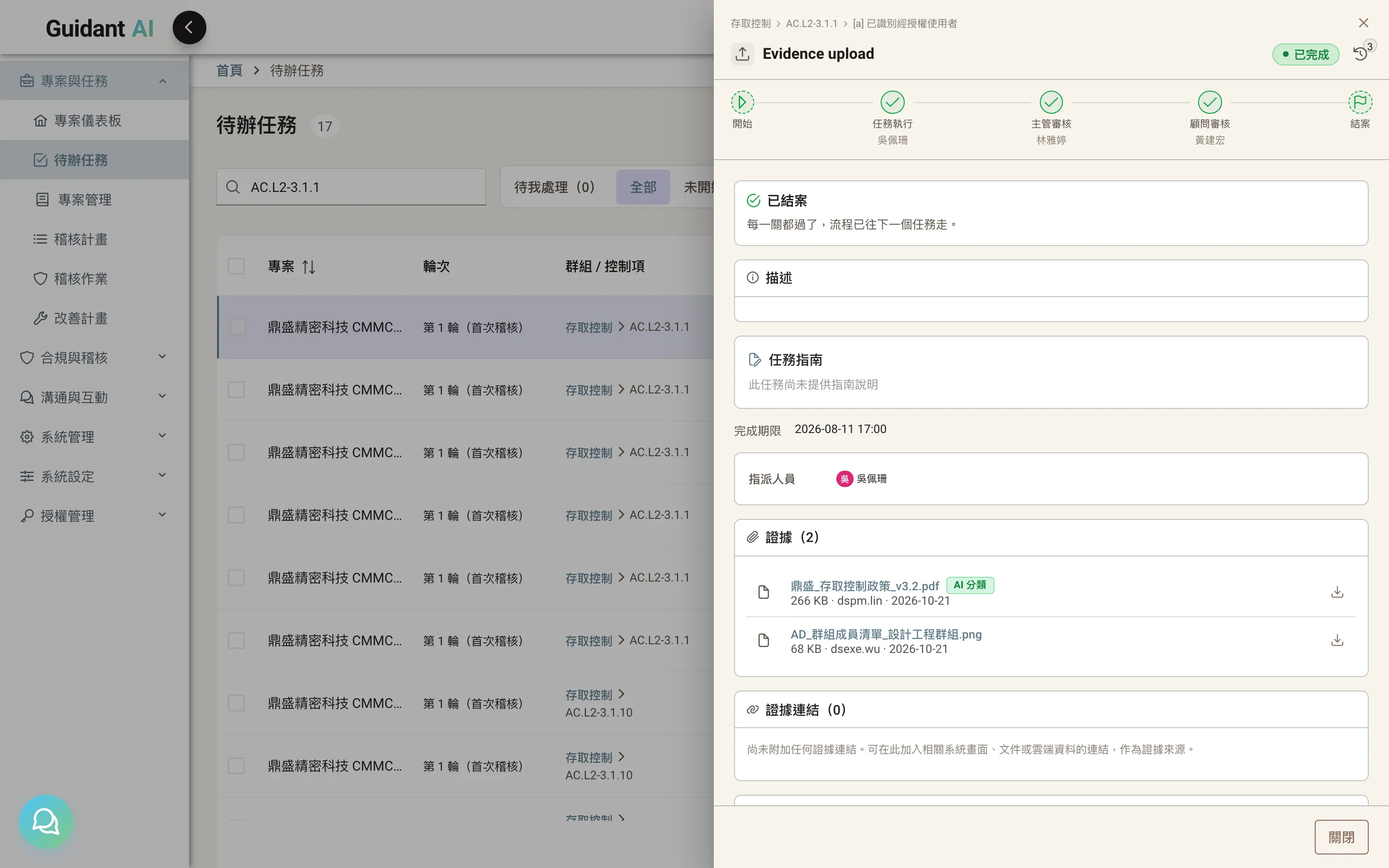
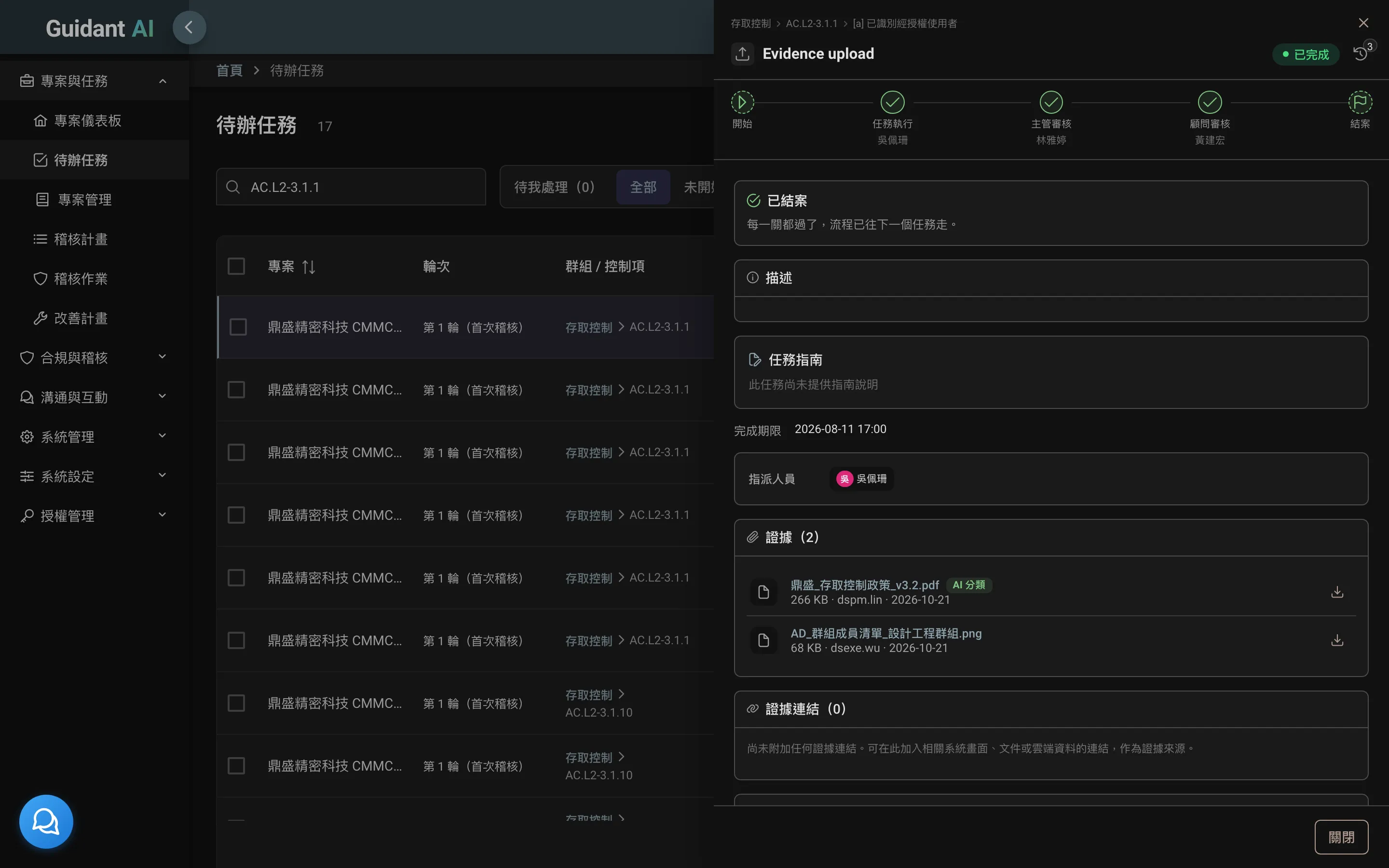
Objectives become tasks with an owner and a due date. The owner uploads evidence or answers a questionnaire; managers and consultants review gate by gate. Monthly and quarterly checks reopen on schedule, with reminders before they are due.
- The task drawer holds the description, evidence, questionnaire, execution log and comments on one screen
- Review gates are configurable: how many, who signs off; returns require a reason
- Evidence can be uploaded, synced from cloud storage, or collected by the scan Agent
05
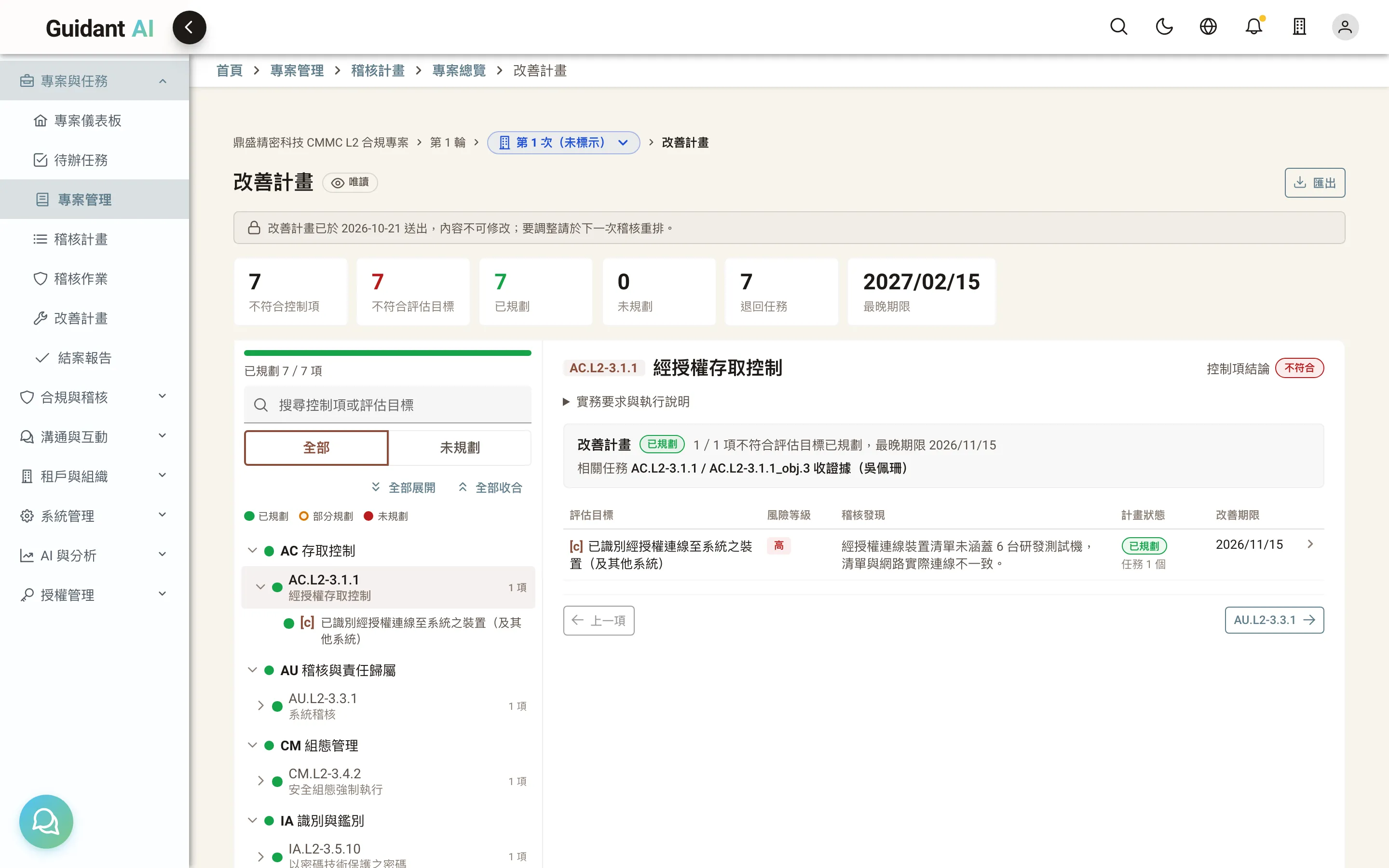
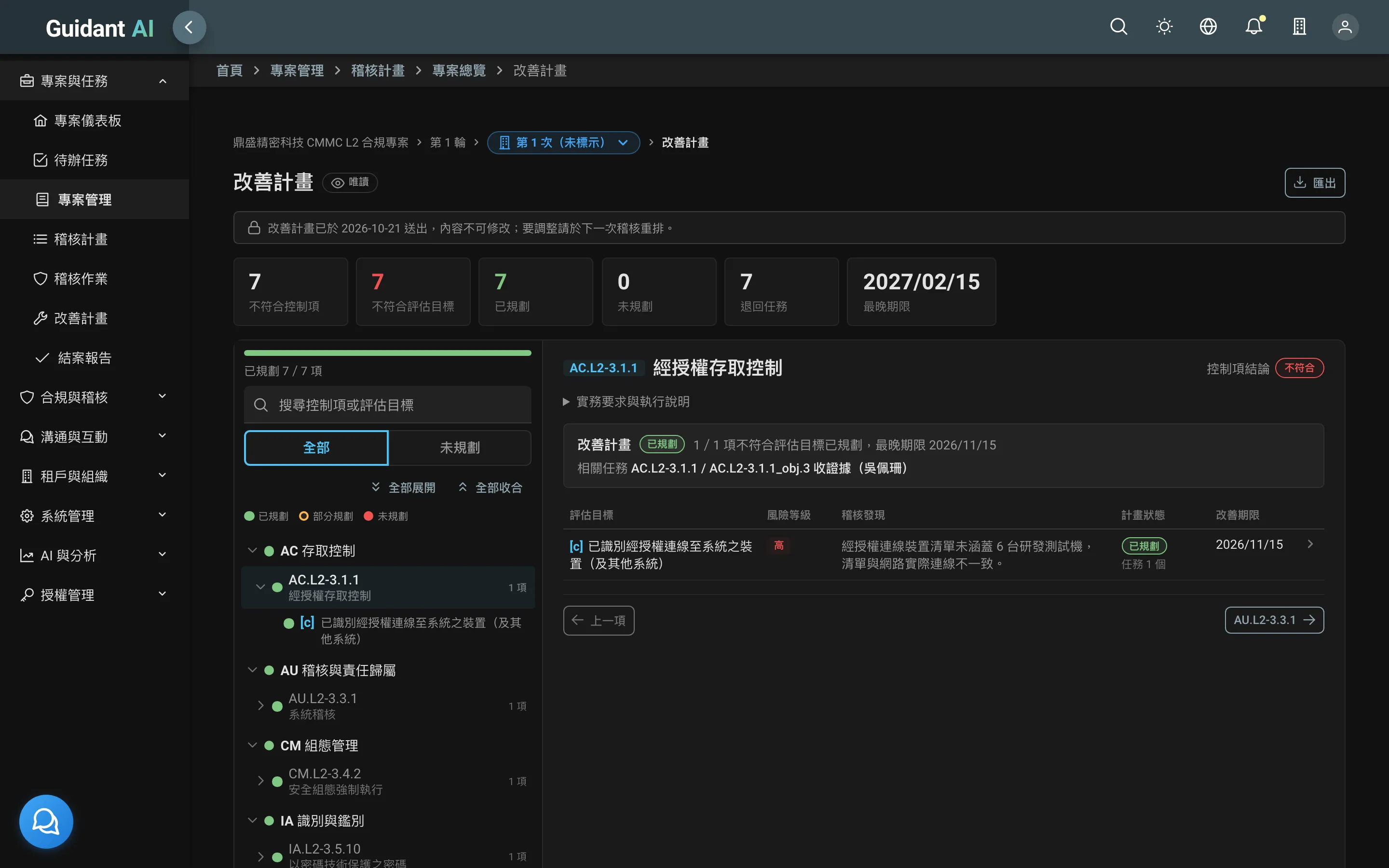
Audit work: plan, assess, remediate
Rule on each control; failures become the remediation plan
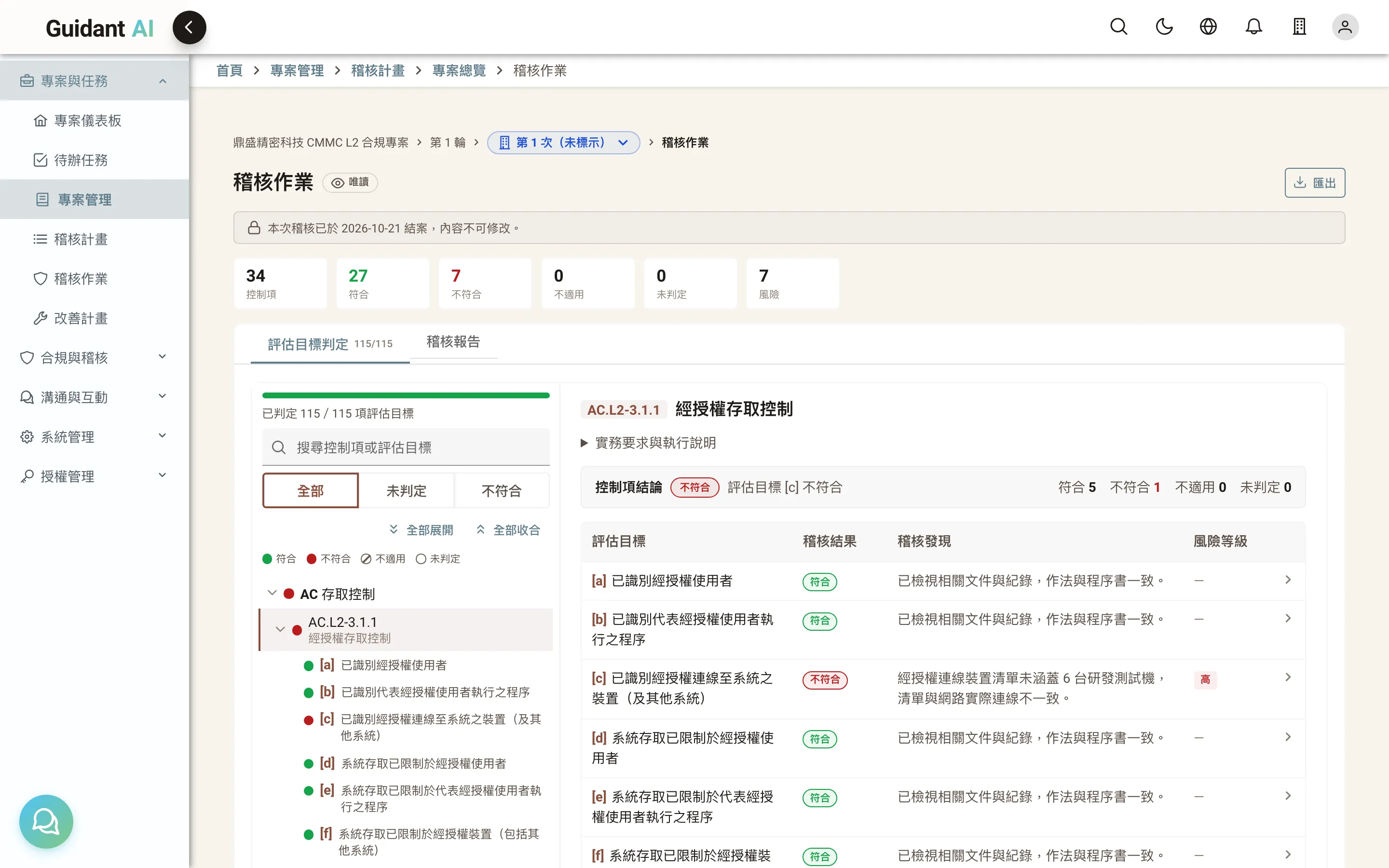
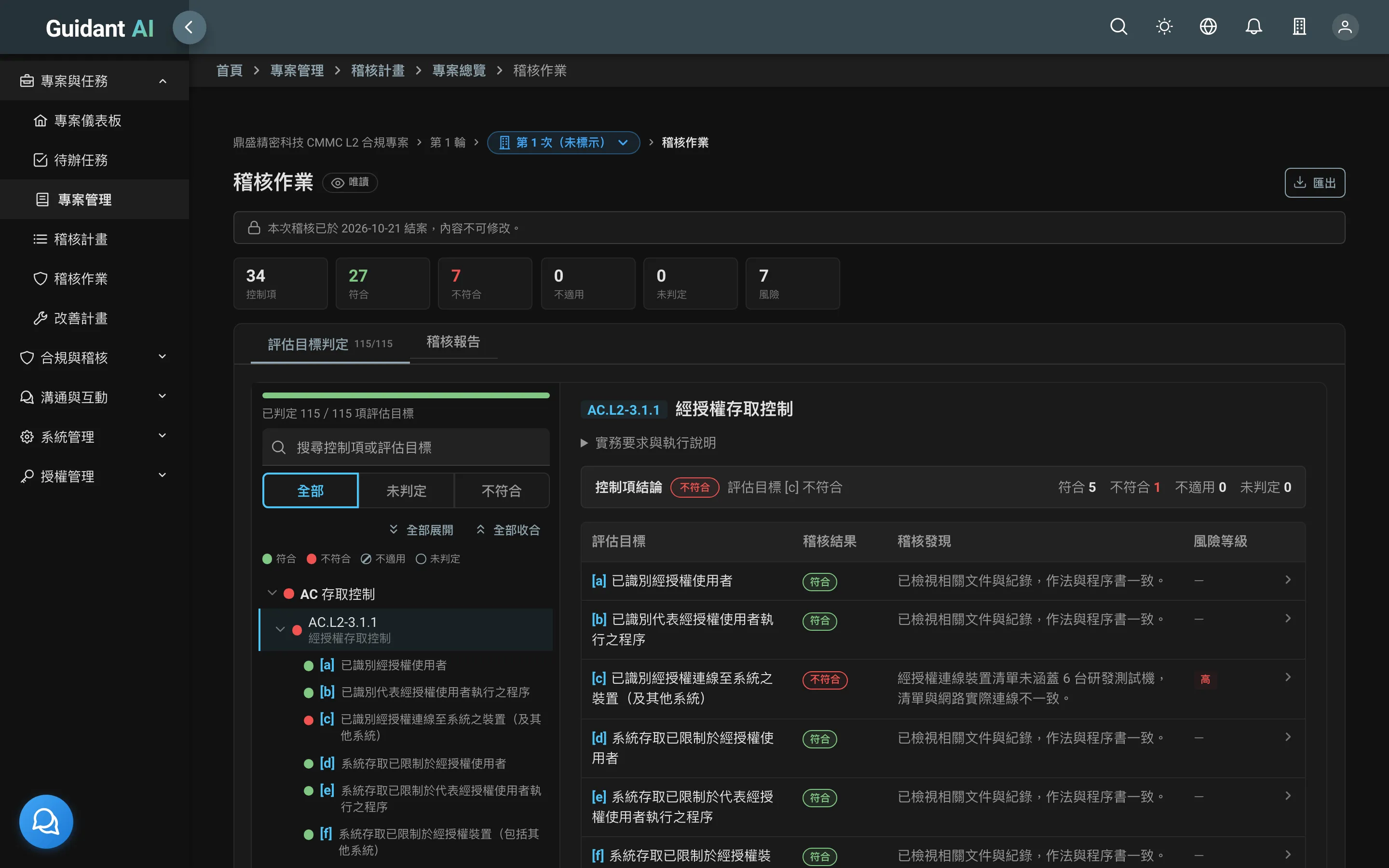
The audit plan records the method and the assessed party per control. During the audit, each objective is ruled conforming or not, with findings and risk. Non-conformities enter the remediation plan with a due date. Four Excel worksheets export for on-site work and import back.
- Ruling page: tree on the left, one card per objective on the right; evidence and ruling without switching pages
- Remediation plan: owner, due date, status, verification result; closing requires evidence
- External auditors log in with a restricted account and see only what they should
06
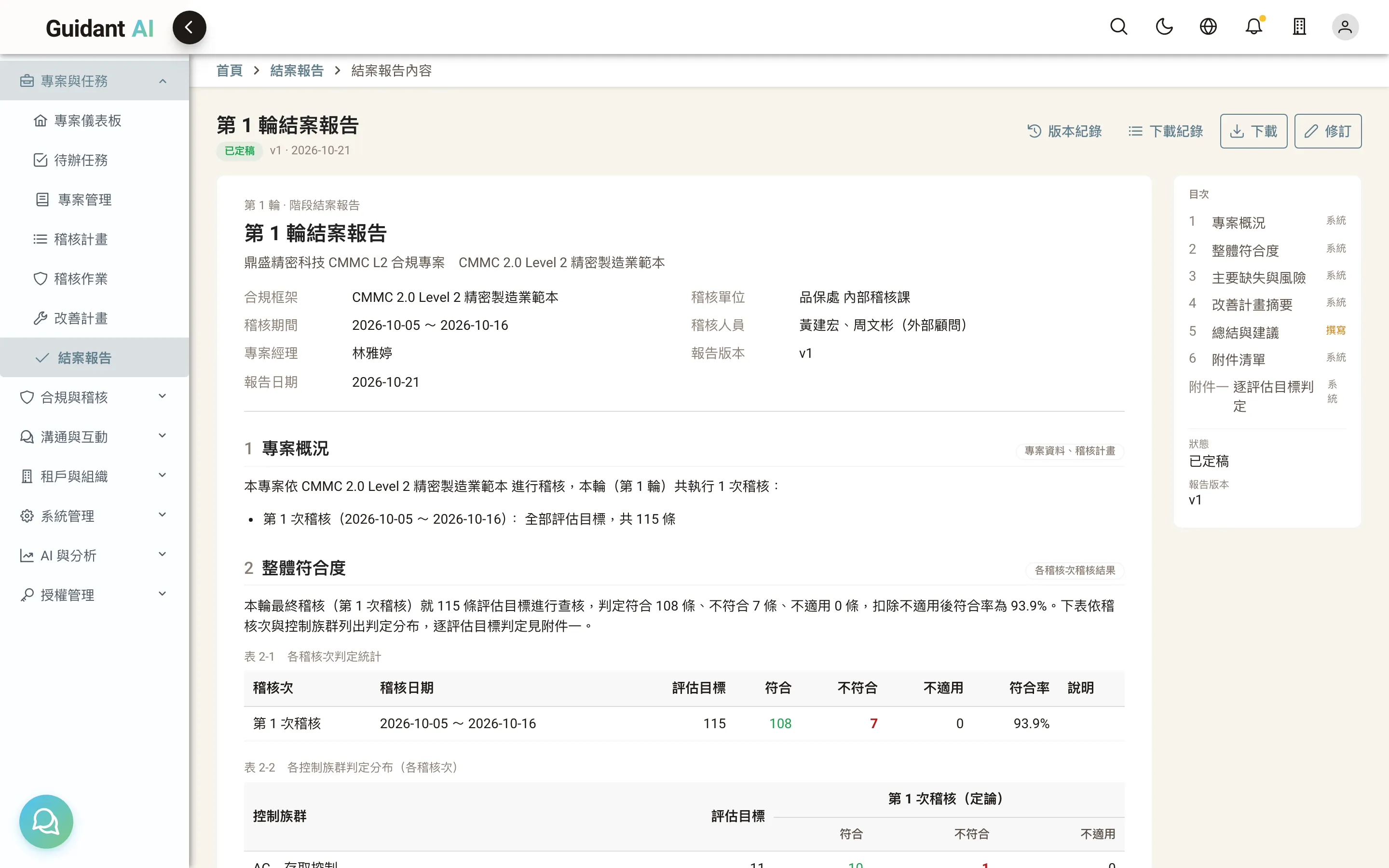
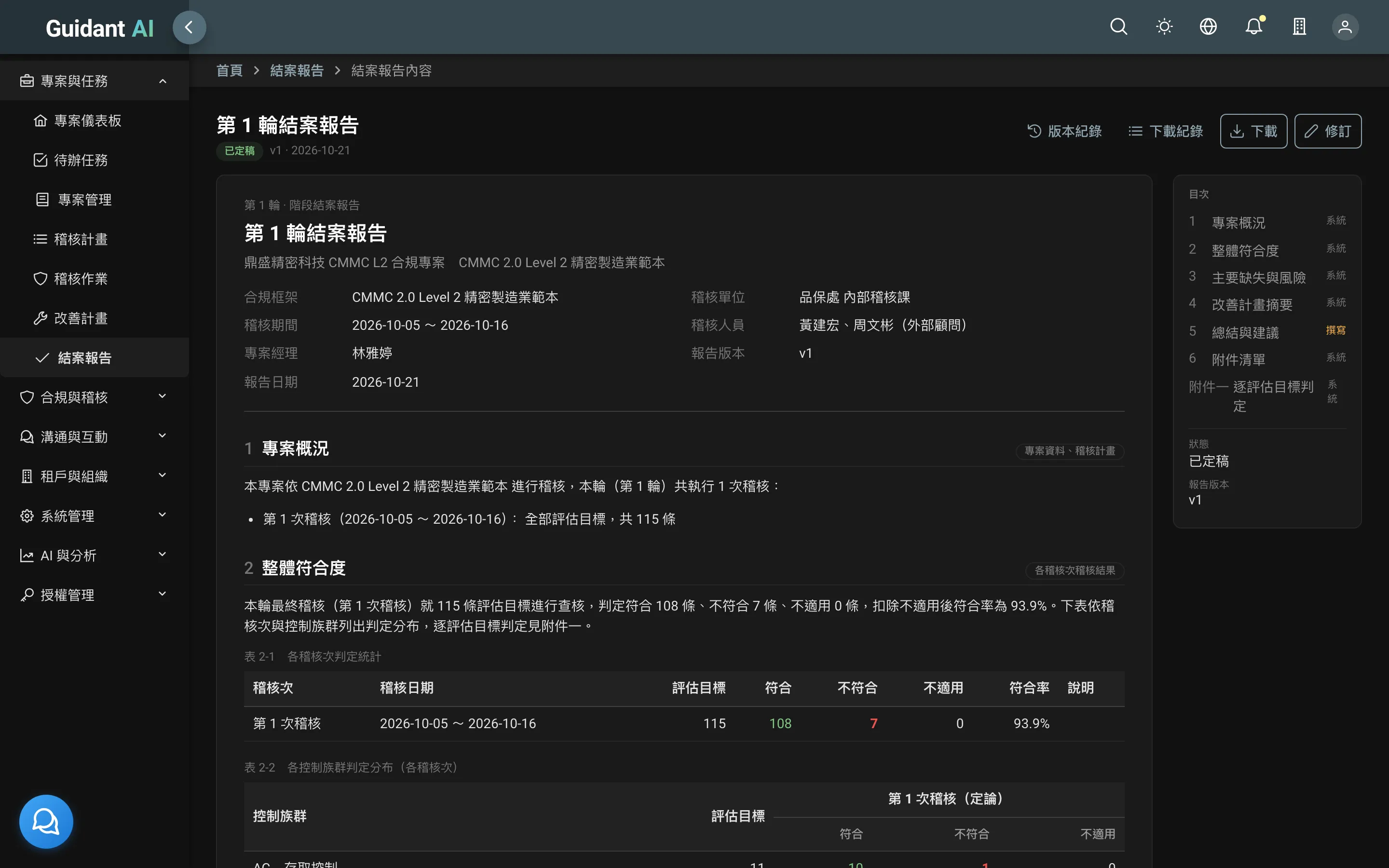
Closing report
The formal report is ready the day you close
Six chapters plus annexes: project overview, audit scope, result statistics, findings and remediation, responsibility matrix, summary and recommendations. Only the last chapter is written by hand; the rest comes from the data. Download Word or PDF; the report bundle includes frozen evidence and cross-reference tables.